
Battery vs. Diesel Light Tower Cost: The Real 2026 Numbers
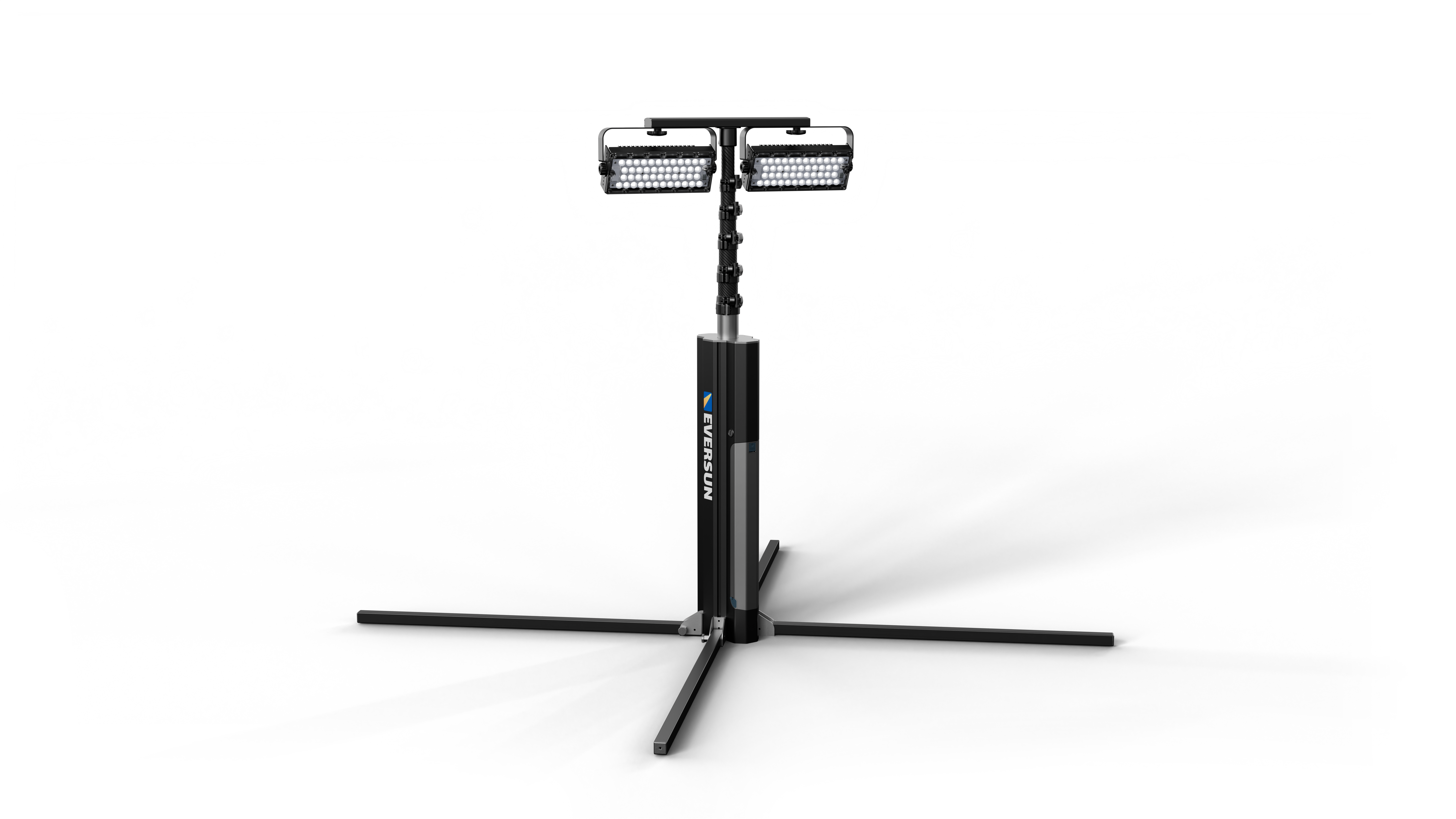
Quick answer: In 2026, a traditional diesel towable light tower costs $10,000–$15,000 to purchase (or $800–$2,500 per month to rent) and typically runs $10,000–$20,000 per year in fuel, maintenance, and setup labor on a regular-use schedule. A compact battery-powered light tower like the Eversun Apollo S costs $3,495 to own with operating costs under $350 per year — no fuel, no engine service, and a one-person, 60-second setup.
Those headline numbers hide a lot of nuance, though. Diesel still wins in a few specific situations, and battery runtime math matters. This guide walks through every line item so you can run the comparison for your own site, field, or event — and if you want to plug in your own rates, our free interactive light tower OPEX calculator does the math live.
The cost categories that actually matter
Light tower cost comparisons usually stop at the sticker price. That's the smallest part of the story. Over a 3-year horizon, four categories dominate:
- Purchase or rental price — what you pay to have the unit at all.
- Energy — diesel fuel vs. a wall-outlet charge.
- Maintenance — engine service, filters, oil, DEF, and downtime for diesel; almost nothing for sealed battery-LED units.
- Labor and logistics — tow vehicles, hitches, two-person positioning, fueling runs, and setup/teardown time every single night.
Side-by-side: 2026 cost profile
These figures reflect current California rates ($5.50/gal diesel, $55/hr loaded labor) and the assumptions used in our OPEX calculator. Adjust down ~15–25% for lower-cost regions.
| Cost item | Diesel towable | Battery/solar towable | Apollo S (battery, compact) |
|---|---|---|---|
| Purchase price | $10,000–$15,000 | $15,000–$25,000 | $3,495 |
| Energy per night | ~$50 (12-hr shift) | ~$1.50 (charge) | ~$0.25–$0.50 (758Wh charge) |
| Maintenance per year | ~$2,400 | ~$600 | ~$50 |
| Setup | ~20 min, 2 people, tow vehicle | ~15 min, 1 person, tow vehicle | 60 seconds, 1 person, fits in an SUV |
| Noise | 65–75 dB | Silent | Silent |
| Emissions | ~20 lbs CO₂/night | Zero on site | Zero on site |
| Light output | 50,000–100,000+ lumens | 50,000–110,000 lumens | 50,000 lumens per unit |
| Weight | 1,200–2,500 lbs | 800–1,500 lbs | 75 lbs |
Worked example: a training field lit 4 nights a week
Say a sports club or contractor lights a field or work area 4 nights per week, about 3 hours per night (~208 nights per year). To keep the light output honest, we'll compare one 100,000-lumen diesel towable against two 50,000-lumen Apollo S units.
Diesel towable (owned)
- Fuel: ~$12.50 per 3-hour night × 208 nights ≈ $2,600/yr
- Engine maintenance (oil, filters, DEF, service): ≈ $2,400/yr
- Setup/teardown: 20 min × 2 crew × $55/hr × 208 nights ≈ $7,600/yr
- Annual operating cost: ~$12,600. Over 3 years with a ~$12,500 purchase: ~$50,000 total — before towing, storage, or downtime.
Two Apollo S battery towers
- Purchase: 2 × $3,495 = $6,990
- Energy: two 758Wh charges per night ≈ $0.50 × 208 ≈ ~$105/yr
- Maintenance: no engine, no fluids ≈ ~$100/yr
- Setup: 60 seconds each, one person, no tow vehicle ≈ ~$380/yr in labor
- 3-year total: ~$7,600–$8,700 — roughly 85% less than owning diesel for this duty cycle.
Rent or buy? The payback math
Diesel towable rentals run $800–$2,500 per month in 2026, plus delivery/pickup fees of $75–$200 each way and fuel on top. At a mid-range $1,650/month, a $3,495 Apollo S pays for itself in about 9 weeks of avoided rental fees — and you own the asset for years afterward. If your lighting need lasts longer than one season, buying a battery unit is almost always cheaper than renting diesel.
Where diesel still wins (honestly)
Battery isn't the right answer for every job, and pretending otherwise helps nobody:
- All-night, full-brightness, no-grid work. A 12-hour highway shift at maximum output exceeds any compact battery's single-charge runtime. Diesel's onboard generator wins when there is genuinely no outlet within reach and no chance to swap batteries.
- Extreme multi-day remote deployments where refueling logistics already exist and charging logistics don't.
- Existing fleet economics. If you already own paid-off diesel units and cheap labor for fueling and towing, your marginal cost math differs — run your own numbers in the calculator.
For everything else — sports training, events, film sets, residential-adjacent construction, facilities work, emergency staging — the combination of noise ordinances, CARB fleet rules, and fuel prices keeps pushing the answer toward battery.
The runtime question, answered straight
The Apollo S runs 3.5 hours at full 50,000-lumen output on its 758Wh battery, and 150+ hours on its lowest dimming setting (0–100% continuous dimming means most real sessions run at 60–80% output and stretch well past 4–5 hours). For longer nights, a spare battery swaps in the field in under a minute, and the tower charges while in use from any standard AC outlet.
Frequently asked questions
How much does a battery-powered light tower cost in 2026?
Compact battery light towers like the Eversun Apollo S cost $3,495. Full-size battery/solar towables run $15,000–$25,000. By comparison, diesel towables cost $10,000–$15,000 to buy but add $10,000+ per year in fuel, maintenance, and labor on regular-use schedules.
How long does a battery light tower run on one charge?
The Apollo S runs 3.5 hours at full brightness (50,000 lumens) and over 150 hours at its lowest setting. Swappable batteries and charge-while-in-use extend runtime indefinitely where AC power is available.
Is a battery light tower as bright as a diesel light tower?
Per unit, diesel towables range from 50,000 to over 100,000 lumens versus 50,000 for a compact battery tower. But two 75-lb battery towers placed at opposite corners often produce more even coverage than one 2,000-lb towable stuck where the truck could reach — at a fraction of the cost.
Is it cheaper to rent or buy a light tower?
Diesel towable rentals cost $800–$2,500 per month plus fuel and delivery. A $3,495 battery tower pays for itself in roughly 2–4 months of avoided rental fees, so buying wins for any need lasting beyond a single short project.
Do battery light towers work for sports fields?
Yes — training fields, pickleball and tennis courts, beach volleyball, and small-sided soccer are the sweet spot. You can model tower counts and real beam coverage for your exact field in the free field lighting simulator.
Run your own numbers
Every site is different. The interactive OPEX calculator lets you set your own diesel price, labor rate, and usage schedule and see the 1/3/5-year totals side by side. If you're lighting a field or court, the field simulator shows exactly how many towers you need and where to place them. The Apollo S is in stock and ships now — or request a quote for multi-unit and fleet pricing.